Alumni Spotlight: Nara Mahone
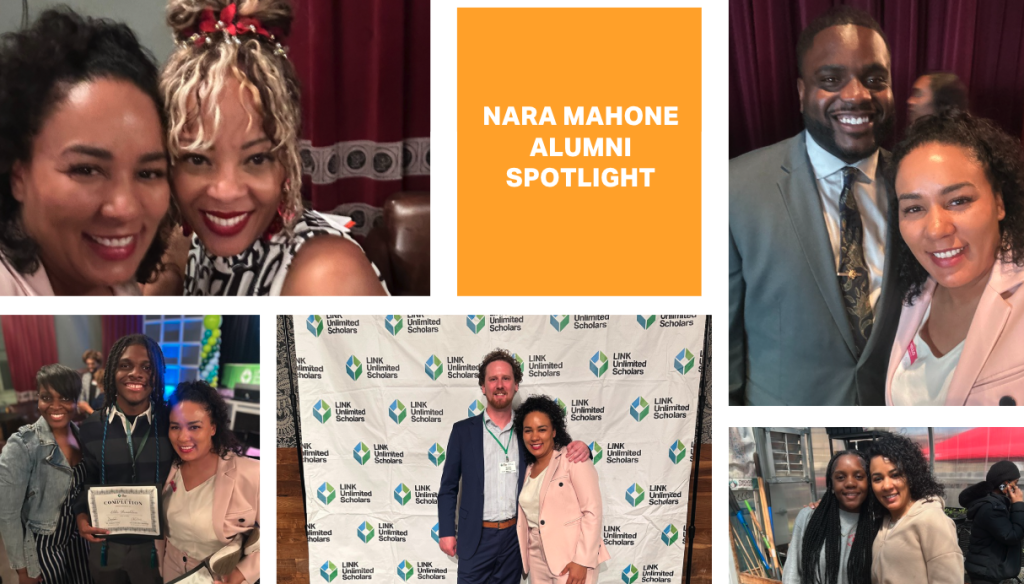
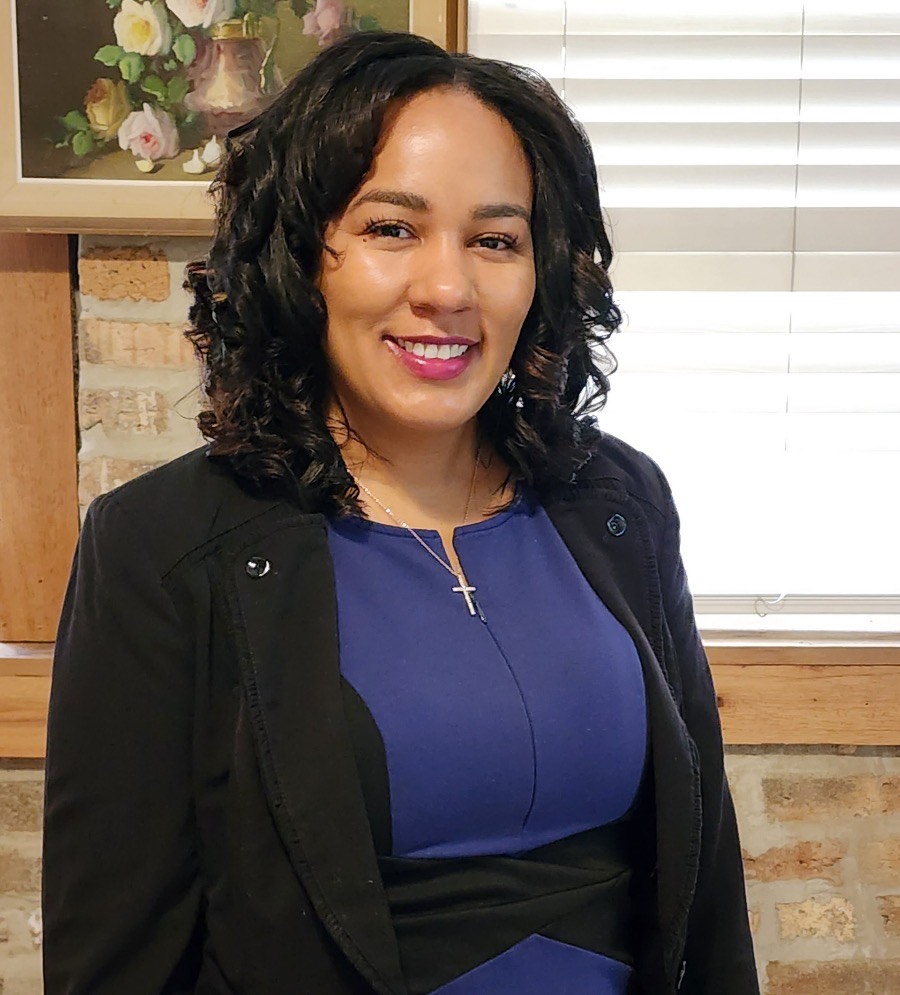
We’re proud to shine the Alumni Spotlight on Nara Mahone, LINK class of 1998 and a graduate of Saint Benedict High School. After high school, Nara attended Barat College of Lake Forest, where she earned a bachelor’s degree in psychology. She later earned her master’s in education from Roosevelt University, as well as a second master’s in education administration from Concordia University. She is now in her final year of work toward her doctorate in education from Liberty University.
Over the years, Nara has taught at Proviso East High School as a special education teacher (Maywood), at Jonathan Burr Elementary as a teacher and instructional coach (CPS), and at Columbus Elementary as an assistant principal (CPS). She also served as a district behavioral specialist in Harvard, IL, where she led initiatives on Trauma Informed and Restorative Practice. For the last five years, she has served as principal at Holy Trinity High School in Chicago.
In a recent conversation, Nara had a lot to share about her experiences as a LINK Scholar.
What are your most transformative memories?
I enjoyed going to Loyola University for summer enrichment sessions every year. It was fun just spending time on the bus with my friends and laughing on that 45-minute drive. Just being able to connect with my peers was important, and I made a lot of special friends—in fact, I’m still friends with some of them today, like Janice Riddle, Karron Hurks, Franklin Reynolds, and Jermaine Stewart.
Also, the teachers really made the summer enrichment program fun and engaging, and I learned a lot. Math was an area of weakness for me, and having that extra time in the summer to strengthen my math skills really prepared me for my freshman year of college. I’m very grateful for that. I remember some of the teachers were so willing to help me with math problems. It was great to have those connections and people who supported me along the way and helped me academically.
How did LINK help prepare you for college?
With math support, definitely!
Throughout high school, we had exposure to different types of events and outings, places I would never have gone otherwise. Also, we had guest speakers come talk to us about their careers, like a career fair where professionals from different sectors were represented. As a teenager, it was very important for me to see what I could become as a young adult. LINK provided opportunities for me to see professional people who looked like me.
We also had Mentor-Sponsors from the business world, and getting that exposure to day-to-day working skills, having conversation, having debates, and learning about the things you have to do every day in the business world was very helpful.
How did you decide to go into education?
I earned my bachelor’s degree in psychology, and I wasn’t sure what I wanted to be. I thought about becoming a doctor or going into business—but I just knew I needed to graduate. A few years later, I came back home to spend time with my father before he passed, and during that time, my best friend’s mother offered me a job as an aide at a high school.
That was a critical time in my life, as I realized I really loved working with students. I was an aide for two years, and I was the only consistent person in those children’s lives. From that experience, I knew teaching was my calling, the path of my career, so I decided to go back to school to get a degree in education. After I became a teacher, I was able to go back to the same classroom where I had been an aide, so I got a chance to see my students graduate.
I’m very grateful for all the experiences and opportunities I’ve had at different schools over the years and for all the different people I’ve met along the way.
What is your involvement with LINK now?
Being a LINK alum, I’ve been to a number of the reunions we’ve had, and I’ve loved listening to people talk about what they’re doing now. It’s fun to remember what they used to be and watch them grow up and become these wonderful professionals with a work life and a family life.
The former head of LINK was my Mentor-Sponsor in high school. He supported and encouraged me, and I realized I wanted to do the same thing for others, to give back and support young ladies and young men growing up on the West Side of Chicago without a lot of opportunities. I became a LINK Mentor because I wanted to give back. I want to expose Scholars to similar experiences to what I had, going on outings and fun trips, and get to know what their interests are and support them.
Also, Holy Trinity is hosting LINK for a lot of the Saturday Academy programs, and it’s amazing to have LINK in the building and get to see students from all over the city get exposure and attend different workshops and get different mentoring support. It’s great to collaborate and build a network of new relationships with other people in the building—great opportunities not just for the students but also for the organization.
What can people learn from your story?
LINK is a wonderful opportunity for students and families to experience personal development and growth. And the Scholars also learn new academic skills—I got help with math, and eventually I ended up teaching math! My math skills became strong enough to teach math to middle school students. LINK impacted the trajectory of my career and my overall personal development, and that continues, as I give back as a Mentor.
I encourage families to get involved with LINK. If there’s an event happening, go with your student. If it’s a family event, get to know people. You never know who you’re going to meet along the way who may really impact your life in a positive direction. Building relationships through LINK is a great way to build a network of support.
Any final thoughts?
My LINK Mentee is a student at Holy Trinity, and I see myself in her, learning and growing and trying to figure things out. I really enjoy talking to her and hearing about her life, her ups and downs, and things she’s experiencing as a high school student.
Many LINK Scholars go through challenges, but they still continue working hard and they do very well. For me, resilience and determination were key words, and I think resilience is something that a lot of our LINK Scholars experience. There are some really successful people who have come out of LINK, and now they continue to support and participate in the program.
Congratulations on all your educational achievements and career success, Nara!
We are so proud of you!